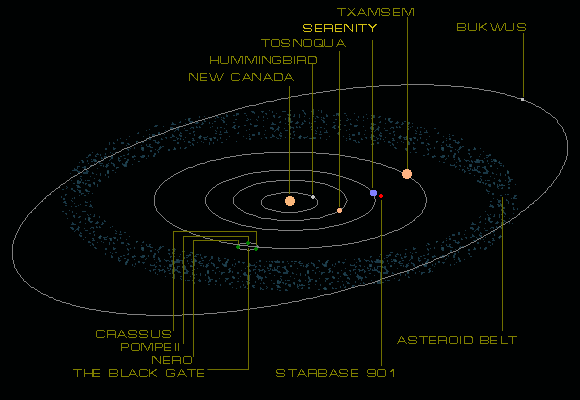
|
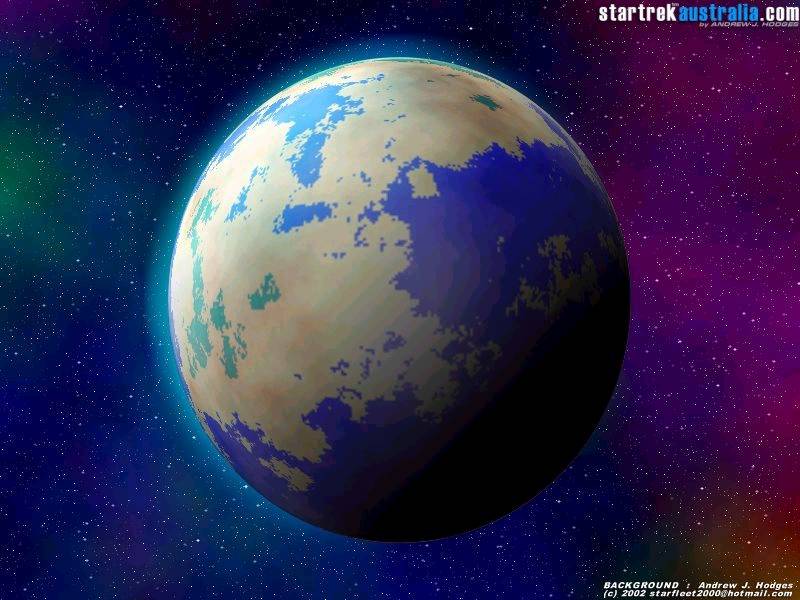 |
The planet Serenity is very similar to Earth; gravity, temperature and atmosphere are all within a few percent of Earth-normal. A day is a few minutes longer than a day on Earth, and a year a few weeks shorter.
 Geology
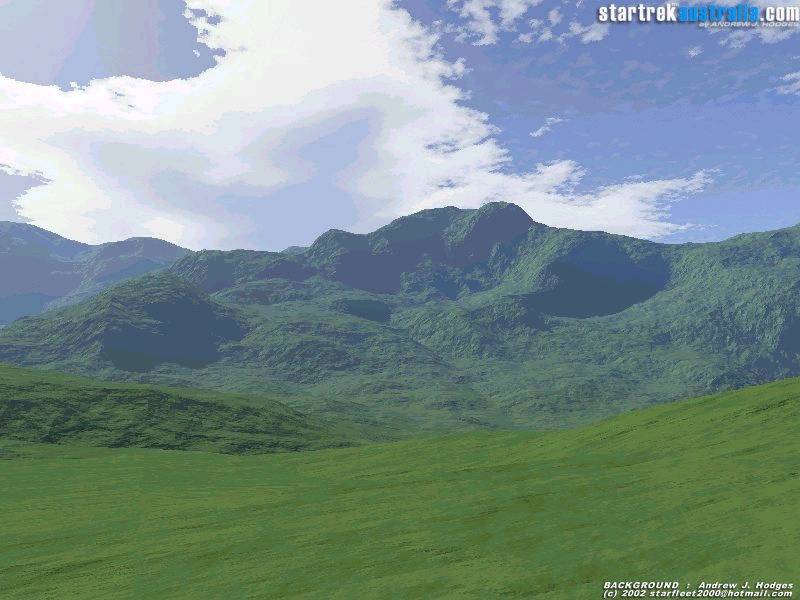
Serenity is tectonically very active. Spectacular, sheer mountain ranges result from crustal upthrust at plate boundaries, and several impressive volcanoes tower above hot spots. The land area is very much like that of Earth, with environments ranging from tropical rain forests near the equator to frozen tundra near the polar regions. A vast desert dominates the northeast part of the northern continent, while elsewhere are green, fertile valleys and forests. A mighty river system drains most of the continent into the southern ocean.
The southern continent is still a mystery. It is unexplored, but is known to be covered by thick rain forests and jungles. A huge, mist-shrouded mountain peak sticks out of the forest canopy deep in the heart of the land.
Nearly 2/3 of the surface area of Serenity is ocean, which is churned by a tidal cycle that's powered by the gravitational pull of Serenity's moon Yukon.
Serenity's biosphere is as diversified and abundant as Earth's, although somewhat more primordial. It supports a vast diversity of plant, avian, and insect life as well as a great diversity of fish and crustaceans. The dominant life forms are a curious combination of mammalian and reptilian characteristics: warm-blooded, having both scales and fur, laying eggs instead of bearing live young. There are persistent rumors of large creatures resembling Earth's dinosaurs inhabiting the impenetrable southern continent, but the existence of such has yet to be proven.
Imported Earth grains and livestock have little difficulty adapting to Serenity's conditions.
Serenity's atmosphere is nitrogen-oxygen, rich in water vapor. The climate ranges from arctic conditions in the polar regions to tropical conditions near the equator. Serenity is tilted on its axis in a manner that gives it seasons that are very like those of Earth.
Three hundred years ago, a colony ship from El-Auria landed on Serenity, and the planet has been sparsely populated ever since. It wasn't until the arrival of the humans and Starfleet twenty years ago, however, that the population began to rise dramatically. Where once a few hundred farmers made a living on the fertile soils, today the population is over 200,000, with most of those divided between Serenity City, Lake Town, and the SF Marines Base.
Today, the primary settlement on Serenity is Serenity City, located on a huge bay on the northern continent. It is a bustling, modern metropolis of over 100,000 inhabitants. All manner of facilities and entertainments can be found downtown. The broad, flat landing fields of Serenity Spaceport dominate the Spaceport Quarter, and the office towers of the Starfleet sector base can be seen in the Starfleet Quarter. Scattered all over the rest of the continent are many other small settlements, fishing villages, mining towns, cattle ranches, etc. Starfleet maintains a large Marine training facility on the east coast, built during the First Mulluran War.
There are no human settlements on the southern continent due mainly to the impenetrable jungle that completely covers the land area. There are persistent rumors however, of sightings of native aboriginal inhabitants there.