Overview
Body armor has been used in combat since the early ages of mankind.
It is used to protect the wearer from attacks by enemies in both melee
and ranged combat. Powered Armor Suits are no different in this respect,
but they go a step further. They are the state-of-the-art in infantry
tactical weaponry. In addition to providing protection to its wearer,
Powered Armor also enhances the wearer's strength, speed, and situational
awareness.
Suit Components
Inner Layer
The innermost layer of a power armor suit is a fire-retardant jumpsuit
meant to protect the wearer in the case of fire and chemical agents.
The material is breathable, and keeps the wearer comfortable.
Outer Layer
The actual armor plating of It is comprised of interlocking composite
plates over the entire body. These plates can withstand light to moderate
phaser fire and impact from projectile weapons. All joints are powered
by motorized servos, which respond to and amplify the wearer's natural
movements, enabling him to perform extraordinary feats of strength and
agility.
Helmet
The helmet contains an advanced electronics system. Information from
a combat tricorder unit, along with environmental and situational awareness
can be imposed over the front faceplate for the user's information.
The helmet also contains infrared and ultraviolet amplification equipment
for low light missions and an air scrubbing system in the event of use
in toxic atmospheres or biological warfare.
Mobility
Running
Using the Powered Armor's built-in servo-motors, the wearer is able
to run at speeds up to 60 kph, depending on the exact suit model. While
running, a powered armor suit moves in a long, loping stride, with a
step of more than 10 meters. Running speed can be sustained for the
duration of the wearer's physical endurance.
Jumping
From a standing start and using only the Powered Armor's servo-motors,
the wearer can jump approximately 10 meters, depending on the exact
suit model. Using the suit's Jump Jets, this distance can be boosted
to a mile or more. Upon touching down, the wearer can immediately jump
again, and in this fashion, leapfrog across the countryside in mile-long
bounds.
The Jump Jets use a tremendous amount of energy, and continued use
will quickly deplete the suit's power reserves.
Power
Powered Armor Suits are powered by a pair of microfusion generators.
These generators supply all the energy needed for movement, including
the Jump Jets, weapons, armor polarization, life support, and electronics.
Fuel is synthesized by the suit from plain water, held in two pressurized
tanks on the suit's back. Fully charged and with light use of the Jump
Jets, a Powered Armor suit will run for up to 1 full day on 2 tanks
of water. Heavy use of Jump Jets can diminish this time by half.
The water tanks can be refilled by the wearer in the field at any time
given a fresh water supply, making the suit's power supply life indefinite.
Weapons
In addition to handheld weaponry, Powered Armor Suits can be fitted
with a multitude of snap-on weapon systems ranging from small phasers
to rockets powerful enough to destroy an entire city. Smaller weapons,
such as phasers and grenade launchers, can be attached to hardpoints
on the suit's forearms. Larger weapons, such as missile launchers and
cannons, are attached to hardpoints on the suit's shoulders.
Defenses
Powered Armor suits have no shielding, but are coated in a special
material which is resistant to moderate phaser fire. The composite plating
is also impervious to projectile weapons. Electronic Countermeasure
(ECM) suites come standard on Ninja and Shogun models, and can be installed
on Ronin and Samurai models as dictated by mission requirements.
Sensors
All Powered Armor Suits have short-range sensors and targeting computers
capable of tracking 1024 individual enemies simultaneously. In addition,
Scout and Command suits have long-range sensors. On the battlefield,
Combat suits use their short-range sensors to engage the enemy, and
can be connected to Scout and Command suits via data uplink to also
give every soldier a view of the 'big picture'
|
| |
|
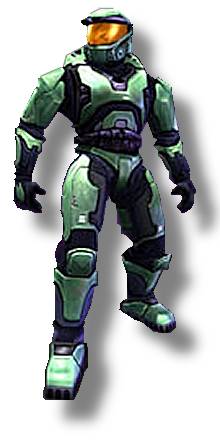
A-25 RONIN SF Marines Standard Combat Suit |
 |
| Model |
A-25 "Ronin" Suit |
| Type |
Starfleet Marines Standard Combat Suit |
| Weight |
800 kg (1,760 lb) |
| Max Speed |
95 kph (60 mph) |
| Fuel Cell Life |
26 hours |
| Life Support |
26 hours |
| Jump Height |
| Servomotors |
12 m (40 ft) |
| Jump Jets |
1.5 km (1 mile) |
| Sensor Range |
| Long Range |
none |
| Target Tracking |
5,000 m (3 miles) |
| Weapon Hardpoints |
| Forearm |
2 forearm hardpoints |
| Shoulder |
1 hardpoint on left shoulder |
| Back |
none |
| Defenses |
| |
Standard armor plating |
| Other Systems |
| |
|
|
|
In addition to what the soldier carries in his hands, the A-25 model
has attachment points on forearms and left shoulder for additional weapons.
The available weapons and mobility of the A-25 model makes it ideally
suited for melee combat and taking out the enemy infantry and smaller
combat vehicles.
|
| |
|
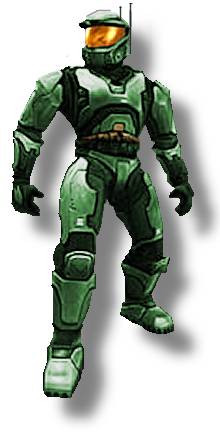
| AE-25
NINJA SF Marines Recon Suit |
 |
| Model |
AE-25 "Ninja" Suit |
| Type |
Starfleet Marines Scout / Reconnaissance Suit |
| Weight |
825 kg (1,820 lb) |
| Max Speed |
120 kph (75 mph) |
| Fuel Cell Life |
28 hours |
| Life Support |
28 hours |
| Jump Height |
| Servomotors |
20 m (65 ft) |
| Jump Jets |
1.5 km (1 mile) |
| Sensor Range |
| Long Range |
80,000 m (50 miles) |
| Target Tracking |
5,000 m (3 miles) |
| Weapon Hardpoints |
| Forearm |
2 forearm hardpoints |
| Shoulder |
none |
| Back |
none |
| Defenses |
| |
Standard armor plating |
| |
ECM system |
| Other Systems |
| |
Data uplink transmitter |
|
|
The Ninja suit sacrifices the shoulder hardpoint of the standard A-25
in favor of more powerful servomotors (for higher running speed), and
sophisticated sensors, data uplink, and ECM modules.
|
| |
|
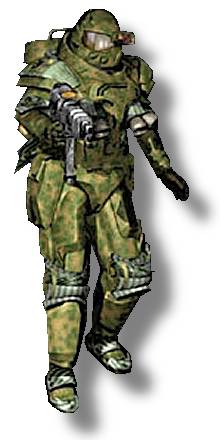
| A-28
SAMURAI SF Marines Heavy Combat Suit |
 |
| Model |
A-28 "Samurai" Suit |
| Type |
Starfleet Marines Heavy Combat Suit |
| Weight |
1200 kg (2,645 lb) |
| Max Speed |
40 kph (25 mph) |
| Fuel Cell Life |
24 hours |
| Life Support |
24 hours |
| Jump Height |
| Servomotors |
10 m (32 ft) |
| Jump Jets |
1 km (0.6 miles) |
| Sensor Range |
| Long Range |
none |
| Target Tracking |
5,000 m (3 miles) |
| Weapon Hardpoints |
| Forearm |
2 forearm hardpoints |
| Shoulder |
2 hardpoints on shoulder |
| Back |
1 hardpoint on back centerline |
| Defenses |
| |
Heavy armor plating |
| Other Systems |
| |
|
|
| These suits are pure killing machines, each carrying
the destructive capacity of an entire 20th-century tank platoon. They are
best suited for taking out heavily armed or large targets such as large
combat vehicles, buildings and guarded installations. In addition to the
weapons the soldier carries in his hands, hardpoints on the suit's forearms,
shoulders and back allow the attachment of additional weapons systems, such
as rocket launchers, autocannons, or specialty packages. |
| |
|
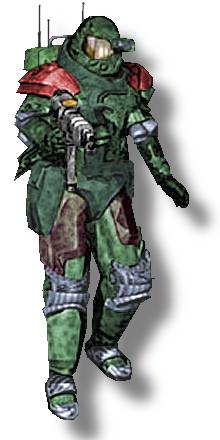
| AE-28
SHOGUN SF Marines Command & Control Suit |
 |
| Model |
AE-28 "Shogun" Suit |
| Type |
Starfleet Marines Command & Control Suit |
| Weight |
1400 kg (3,085 lb) |
| Max Speed |
120 kph (75 mph) |
| Fuel Cell Life |
36 hours |
| Life Support |
36 hours |
| Jump Height |
| Servomotors |
20 m (65 ft) |
| Jump Jets |
1.5 km (1 mile) |
| Sensor Range |
| Long Range |
80,000 m (50 miles) |
| Target Tracking |
5,000 m (3 miles) |
| Weapon Hardpoints |
| Forearm |
2 forearm hardpoints |
| Shoulder |
2 hardpoints on shoulder |
| Back |
extra fuel tank |
| Defenses |
| |
Heavy armor plating |
| |
ECM system |
| Other Systems |
| |
data uplink transmitter |
| |
128 communication channels |
| |
master override capability for all other suits on the battlefield |
|
| The Shogun Command suit is the epitome of Powered
Armor design, possessing both the power and strength of the heavy Samurai
suit with the speed, agility, and electronics systems of the light Ninja
suit. They are used by command grade Marines on the battlefield to coordinate
operations using extensive communications and data uplink systems. Shogun
suits are prohibitively expensive however, and are therefore produced in
very limited numbers, and are rarely used. |
| |
|
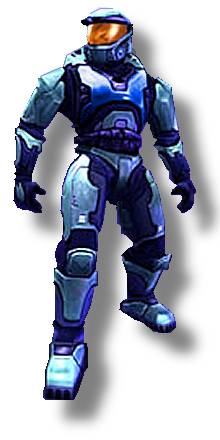
| S-32R
SHEPHERD Support / Search & Rescue Suit |
 |
| Model |
S-32R "Shepherd" Suit |
| Type |
Support / Search & Rescue Suit |
| Weight |
850 kg (1,870 lb) |
| Max Speed |
95 kph (60 mph) |
| Fuel Cell Life |
30 hours |
| Life Support |
30 hours |
| Jump Height |
| Servomotors |
12 m (40 ft) |
| Jump Jets |
not equipped |
| Sensor Range |
| Long Range |
none |
| Target Tracking |
5,000 m (3 miles) |
| Weapon Hardpoints |
| Forearm |
2 forearm hardpoints (1 used) |
| Shoulder |
none |
| Back |
none |
| Defenses |
| |
Standard armor plating |
| Other Systems |
| |
Data uplink transmitter |
| |
Full tricorder capability |
| |
Cutting tool in forearm mount |
| |
Hostile environment capability |
| |
External storage mounts on legs |
|
| The S-32 Powered Armor chassis comes in two basic
designs: a standard SAR/recovery model, and a medical variant. Both frames
are merely modifications of the standard A-25 series used by SFMC for combat
and scouting purposes. In the case of both suits, the jump jet capability
has been removed in order to upgrade the fuel cell and life support capacity.
Due to specific needs of the SAR mission, many of the standard equipment
has been swapped out in favor of mission specific and critical components.
On both suits, one of the forearm mounts is occupied by the same cutting
tool used in starship construction. The other hardpoint can accept the
same equipment that the A-25 series accepts. Both suits sensor capabilities
have been upgraded with an integrated tricorder, which can display information
directly onto the suit's HUD system. Additionally, both suits offer the
wearer full hostile/hazardous environment protection.
|
| |
|
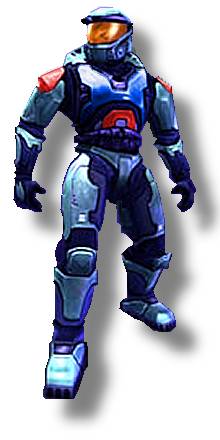
| S-33RM
BLOODHOUND Support / Search & Rescue Medical Suit |
 |
| Model |
S-33RM "Bloodhound" Suit |
| Type |
Support / Search & Rescue Medical Suit |
| Weight |
825 kg (1,815 lb) |
| Max Speed |
95 kph (60 mph) |
| Fuel Cell Life |
30 hours |
| Life Support |
30 hours |
| Jump Height |
| Servomotors |
12 m (40 ft) |
| Jump Jets |
not equipped |
| Sensor Range |
| Long Range |
none |
| Target Tracking |
5,000 m (3 miles) |
| Weapon Hardpoints |
| Forearm |
2 forearm hardpoints (1 used) |
| Shoulder |
none |
| Back |
none |
| Defenses |
| |
Standard armor plating |
| Other Systems |
| |
Data uplink transmitter |
| |
Full medical tricorder capability |
| |
Cutting tool in forearm mount |
| |
Hostile environment capability |
| |
Hypospray system |
| |
Field medical kit |
|
| On the S-33RM, this gear is supplemented by medical
system similiar to what a field medic would carry. This system is used for
triage purposes and immediate battlefield stabilization and trauma treatment.
In addition to this gear, the suit integrates a full medical tricorder in
the same fashion as the S-32 and also incorporates a hypospray delivery
system. The delivery mechanism is contained in the suit's index finger and
is linked to a hypospray reservoir. |
| |
|
