
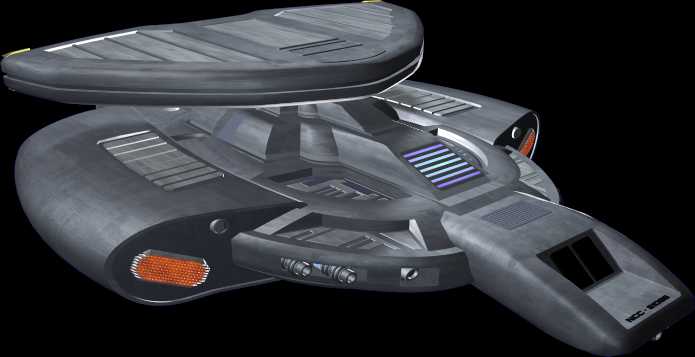
Cat's Eye system patrol craft operate on the outskirts of star systems as a first line of defense against any enemy or illegal activity. They are equipped with sophisticated long-range sensors housed within the sensor pod mounted atop the hull. They can scout out enemy locations while staying well out their own sensor range, then transmit the tactical data to all friendly craft in the area. Refractive shielding renders the Cat's Eye fairly stealthy. If it should ever find itself in a battle situation, the Cat's Eye is not without claws of its own. Twin weapons pods mounted flush with the forward hull can carry an array of different offensive systems, and the torpedo launcher carries a complement of 24 micro quantum torpedoes.
In addition to its role as scout, on extended missions the Cat's Eye can also function as a mobile refueling and rest facility for one full wing of starfighters.
| Class Name |
Cat's Eye |
||||||||||||||||||||||||||||||||||||||||||||||||||||||||||||||||||||||
| Type |
Long-Range Reconnaissance |
||||||||||||||||||||||||||||||||||||||||||||||||||||||||||||||||||||||
| Vessels assigned to Serenity Sector |
|
||||||||||||||||||||||||||||||||||||||||||||||||||||||||||||||||||||||
| Dimensions | |||||||||||||||||||||||||||||||||||||||||||||||||||||||||||||||||||||||
| Length |
30.2 meters |
||||||||||||||||||||||||||||||||||||||||||||||||||||||||||||||||||||||
| Wingspan |
28.6 meters |
||||||||||||||||||||||||||||||||||||||||||||||||||||||||||||||||||||||
| Height |
5.9 meters |
||||||||||||||||||||||||||||||||||||||||||||||||||||||||||||||||||||||
| Mass |
214 tons |
||||||||||||||||||||||||||||||||||||||||||||||||||||||||||||||||||||||
| Crew |
1 Pilot, 1 Sensor Specialist, 6 passengers |
||||||||||||||||||||||||||||||||||||||||||||||||||||||||||||||||||||||
| Armaments | |||||||||||||||||||||||||||||||||||||||||||||||||||||||||||||||||||||||
| Offensive |
2 x Weapons Pods (see below) |
||||||||||||||||||||||||||||||||||||||||||||||||||||||||||||||||||||||
|
1 x Micro-Torpedo Tube (24 torpedoes) |
|||||||||||||||||||||||||||||||||||||||||||||||||||||||||||||||||||||||
| Defensive |
Automodulating Refractive Shields |
||||||||||||||||||||||||||||||||||||||||||||||||||||||||||||||||||||||
|
Light Triadium Armor Plating |
|||||||||||||||||||||||||||||||||||||||||||||||||||||||||||||||||||||||
| Propulsion | |||||||||||||||||||||||||||||||||||||||||||||||||||||||||||||||||||||||
| Warp |
2 x Warp Engines with Warp Burst Capability |
||||||||||||||||||||||||||||||||||||||||||||||||||||||||||||||||||||||
|
Cruise Speed - WF 5 |
|||||||||||||||||||||||||||||||||||||||||||||||||||||||||||||||||||||||
| Maximum Speed - WF 9 | |||||||||||||||||||||||||||||||||||||||||||||||||||||||||||||||||||||||
|
Emergency Speed - WF 11 for 2 hours |
|||||||||||||||||||||||||||||||||||||||||||||||||||||||||||||||||||||||
| Impulse |
1 x Impulse Engines |
||||||||||||||||||||||||||||||||||||||||||||||||||||||||||||||||||||||
Weapons Pods
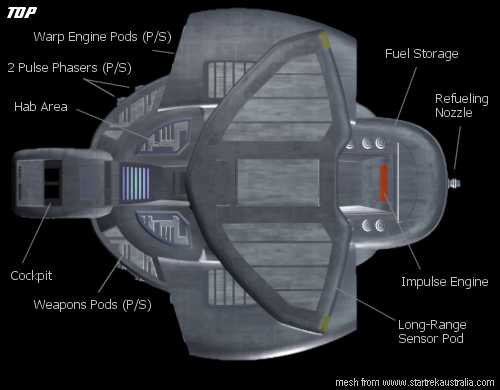
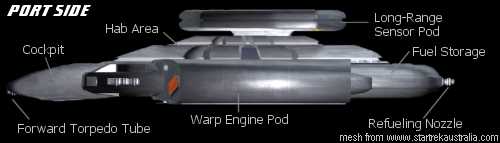
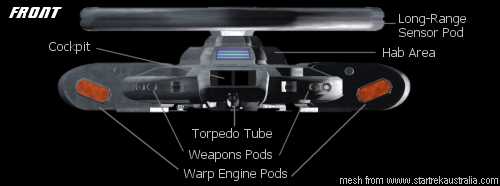
A pair of weapons pods are fitted to the forward edge of the hull, one on either side of the cockpit. The standard pod carries two rapid-fire pulse phaser cannons, but several other variations are on the drawing boards, including pods fitted with ion cannons, quantum pulse cannons, and even projectile weapons.
Micro Torpedo Launcher
The Cat's Eye carries a standard micro torpedo launcher, normally loaded with 24 micro quantum torpedoes.
Triadium Armored Hull
The main spaceframe of the Cat's Eye is composed of standard tridanium and duranium. The hull has an outer sheathing of triadium, an alloy discovered in the Delta Quadrant by the USS Voyager. Triadium is extremely heavy and dense, but when manufactured in thin enough sheets, its strength and flexibility provide excellent protection against kinetic and particle weapons.
Automodulating Refractive Shields
The Cat's Eye carries a standard automodulating shield system. The shield generators also project a refractive bubble around the ship. As a result, 80% of enemy sensor beams are reflected away in random directions never returning to the sending ship, rendering the Cat's Eye very stealthy, though not invisible in the way that a true cloaking device would provide.
The main power plant aboard the Cat's Eye is the new quantum generator. Instead of using a matter/antimatter intermix reactor, the quantum plant generates power using a zero-point energy extractor. The device is small and utilizes no hazardous materials, thus making it ideal for use in small craft.
Quantum power generation is one of the advanced technologies brought back from the Delta Quadrant by the USS Voyager.
Warp Engines
In keeping with its primary role as scout, with a need to get in and out of potentially hostile areas quickly, the Cat's Eye's warp engines can propel the ship at WF9, or WF11 in emergencies.
Impulse Engines
The impulse engine is powered by a standard micro-fusion plant. The power plant has enough stored fuel for 1 month of continual operation. The external Bussard collectors can replenish the fuel cells from the gas from any nebula or gas giant of the appropriate composition.
The Cat's Eye is fitted with a highly specialized long-range sensor pod. Extremely detailed scans can be made from as far away as 6 lightyears, individual target tracking scans have a range of 12 lightyears, and long-range scans can reach a maximum of 50 lightyears at full sensor gain.
All tactical data collected by a Cat's Eye vessel can be retransmitted on secure frequencies to any and all friendly vessels in the area, giving all friendly assets in the theater full situational awareness.
In case of emergency, the cockpit can be detached from the rest of the craft and serve as an emergency life boat, and has enough supplies and power for one week.
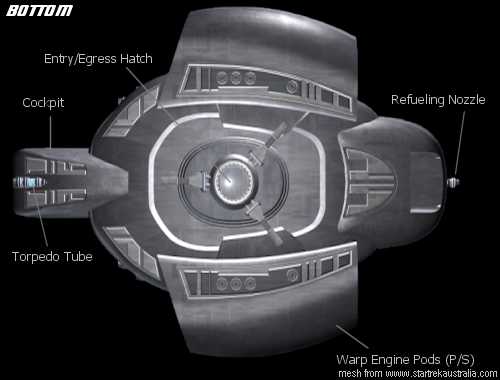
In addition to its role as scout, on extended missions the Cat's Eye can also function as a mobile refueling and rest facility for one full wing of starfighters. A refueling nozzle extends from the hull's rear and attached to the starfighter's nose for fuel transfers, and the small habitat area behind the cockpit has eight bunks and a small mess/rec area.
Starfighters can be flown on autopilot alongside the Cat's Eye while the pilots eat or sleep. Personnel transfer between starfighter and Cat's Eye is accomplished via the transporter aboard the Cat's Eye or the belly hatch.
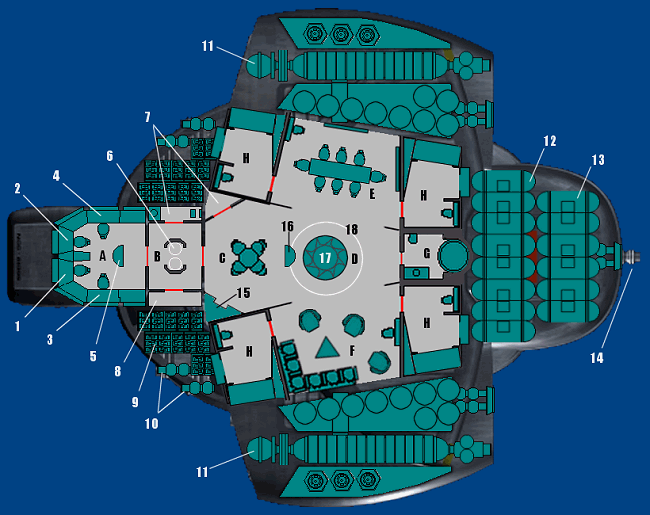
- Cockpit
- Transporter
- Mess Area
- Entry Hatch/Holotank (viewable from both briefing and lounge areas)
- Briefing Area
- Lounge Area (sofas, chairs, tables)
- Bathroom (toilet, sink, sonic shower)
- Double Stateroom (2 bunks, desk, chair, closet, shelves)
- Pilot
- Copilot
- Science
- Engineering
- Tactical
- Transporter Pad (2)
- Storage
- EV Suit Locker
- Phaser Capacitors
- Pulse Phasers (2, P/S)
- Warp Engine (P/S)
- Antimatter Storage
- Deuterium Storage
- Refueling Nozzle
- Replicator
- Hatch/Holotank Controls
- Main Hatch (in floor, iris door, opening covered by atmospheric containment field allowing entry/egress while in space)
- Holographic field perimete